

29 Jan 2026
Updated: 16 Mar 2026
How Hard Is the ASVAB Exam, Really?
The short answer: the ASVAB is not impossible, but it is also not something you want to casually stroll into and hope for the best.

The ASVAB, or Armed Services Vocational Aptitude Battery, is designed to measure what you know, how you think, and how quickly you can apply basic skills under pressure. Some people walk out feeling confident. Others leave wondering what just happened. The difference is rarely intelligence. It is almost always preparation and expectations.
If you are asking how hard the ASVAB is, that means you are already doing the smart thing by taking it seriously.
What the ASVAB Actually Tests
One reason the ASVAB feels intimidating is that it isn’t a single test. It’s a group of subtests measuring very different skills, from math and reading to mechanical reasoning and spatial awareness.
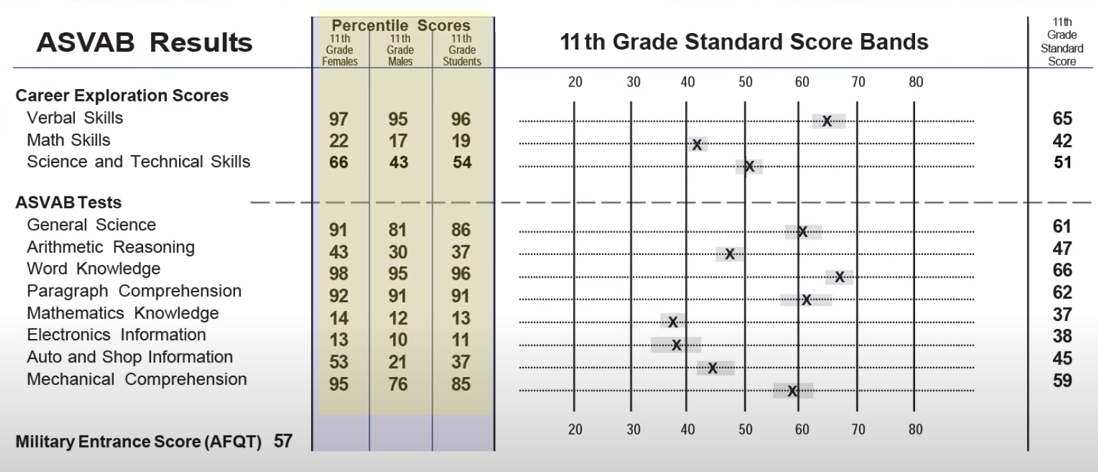
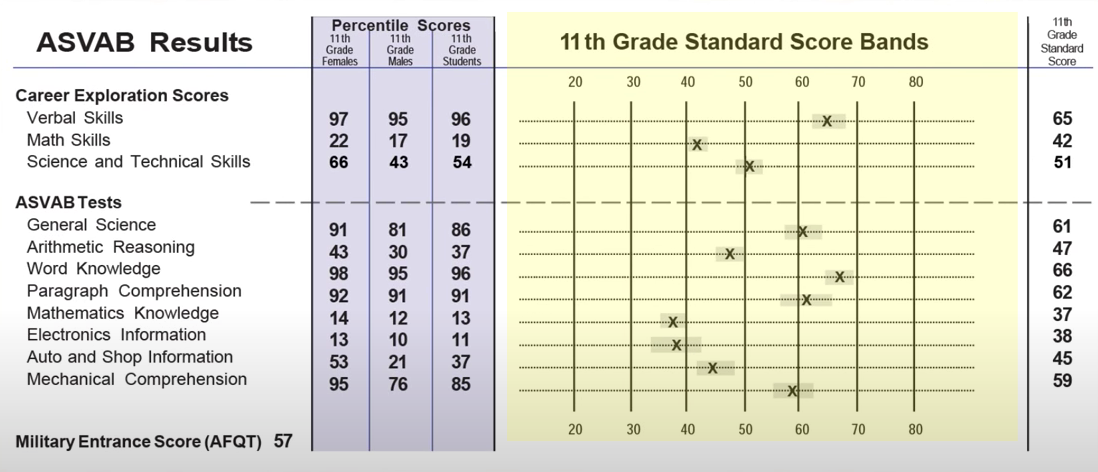
The sections include Arithmetic Reasoning, Mathematics Knowledge, Word Knowledge, Paragraph Comprehension, General Science, Mechanical Comprehension, Electronics Information, Auto and Shop Information, and Assembling Objects. Some contribute directly to your AFQT score, while others help determine which military roles you qualify for.
That distinction matters. Many test takers assume every section carries equal weight, but that’s not the case. You’re not expected to master everything. You’re expected to demonstrate strong fundamentals and solid problem-solving skills.
Why the AFQT Score Confuses So Many People
The AFQT score is one of the most misunderstood parts of the ASVAB.
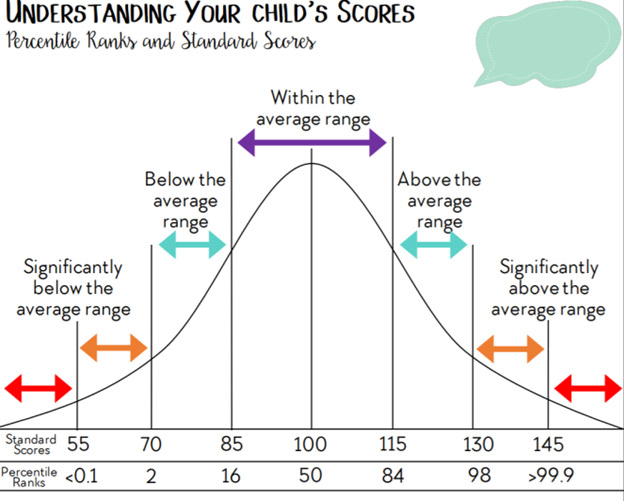
Your AFQT score is a percentile, not a percentage. Scoring a 70 does not mean you answered 70 percent of the questions correctly. It means you scored higher than 70 percent of the reference group of test takers.
This matters because many people panic when they miss questions on practice tests. In reality, you can miss a noticeable number and still earn a competitive AFQT score. The goal is consistency, not perfection.
The Sections Most People Find Difficult
For most adults, math is the biggest hurdle. Arithmetic Reasoning and Mathematics Knowledge rely on skills like fractions, ratios, percentages, and word problems. The math itself is not advanced, but if you have not used it in years, it can feel uncomfortable at first. The challenge is remembering how to approach problems efficiently, especially under time pressure.

Word Knowledge is another trouble spot. Vocabulary questions are unforgiving. You either recognize the word or you do not. The good news is that vocabulary improves quickly with focused exposure, especially when you study words that commonly appear on the ASVAB.
Mechanical Comprehension and Electronics Information tend to divide test takers into two camps. If you grew up working with tools, engines, or basic wiring, these sections often feel intuitive. If you did not, they can feel surprisingly difficult. These sections are less about memorization and more about understanding how things work, which is why diagrams and visual explanations help so much.
How Time Pressure Changes Everything
The ASVAB is timed, and while it is not designed to be cruel, time pressure magnifies small weaknesses. Spending too long on one math question can create stress later in the section. Reading too slowly can hurt Paragraph Comprehension, even if you understand the material.
That’s why practicing under timed conditions matters. Not endlessly or obsessively, but enough to make the pace feel familiar. When timing becomes routine, anxiety decreases and accuracy improves.
Is the ASVAB Harder Than School Tests?
In some ways, yes. In other ways, no.
The ASVAB can feel harder than a typical school test because you cannot rely on last-minute memorization, and because many test takers are years removed from formal education. The stakes also feel higher, which adds mental pressure.
At the same time, the ASVAB does not require advanced math, essays, or deep academic theory. It focuses on fundamentals. Most people who struggle do so because they underestimate the exam, not because it is genuinely beyond their ability.
How Much Studying Is Enough?
There is no single answer, but there are patterns.
If you are fresh out of school and comfortable with math and reading, a few weeks of focused review may be enough. If you have been out of school for several years, expect to spend a month or two rebuilding fundamentals. That is normal and far more common than people admit.
What matters most is consistency. Short, regular study sessions outperform long, infrequent cram sessions every time.
A Practical Way to Prepare Without Overdoing It
One of the most practical ways to stay consistent is to use study tools that fit into your daily routine instead of requiring huge blocks of time. The ASVAB Practice Test 2026 app mirrors the structure of the exam, focusing on key AFQT sections and relevant subtests with realistic questions you can complete in short sessions.
It’s especially helpful for reinforcing math, vocabulary, and pacing when you only have 10 to 20 minutes to study. Used alongside official practice tests and basic content review, it helps you maintain momentum without turning prep into a second full-time job. You can check it out here:


Common Myths That Make the ASVAB Seem Harder Than It Is
A lot of unnecessary stress comes from bad assumptions. You do not need to be good at every section. You do not need a perfect score. And failing once does not mean you are not capable of military service. Many successful candidates improve their scores significantly on a retest with better preparation.
The ASVAB is a qualifying exam, not a judgment of your intelligence or potential.
Final Verdict
So, how hard is the ASVAB?
It is hard if you ignore it.
It is manageable if you respect it.
And it is very beatable if you prepare with intention.
You do not need to be exceptional. You need to be prepared, realistic, and consistent. A solid study plan, the right resources, and a willingness to review fundamentals you have not used in a while go a long way. The test may challenge you, but it is not designed to stop you.

