

30 Dec 2025
Updated: 30 Dec 2025
Tips and Tricks to Study for the ASVAB Exam

How to Study for the ASVAB: Proven Tips + A Simple Study Plan
Studying for the ASVAB can feel like preparing for 10 different tests at the same time. Because it is. The good news: you do not need to be “good at everything,” just some solid Asvab Study Tips. You need a plan, consistent practice, and a way to stop repeating the same mistakes (your brain loves repeats, your score does not).
This guide covers:
- Tips and tricks that actually work
- What to expect on test day
- How to study specifically for the ASVAB (not generic “study harder” advice)
- How to use the EZ Prep ASVAB study app effectively
- A little encouragement at the end (yes, you earned it)
What to expect on the ASVAB exam
The ASVAB has 10 subtests
The ASVAB measures skills across verbal, math, science/technical, and spatial domains. Officially, it’s 10 tests (subtests). (ASVAB)
Typical subtests include:
- Word Knowledge (WK)
- Paragraph Comprehension (PC)
- Arithmetic Reasoning (AR)
- Mathematics Knowledge (MK)
- General Science (GS)
- Electronics Information (EI)
- Auto and Shop Information (AS)
- Mechanical Comprehension (MC)
- Assembling Objects (AO) (ASVAB)
The score you hear about most is the AFQT
Your AFQT score is the main “eligibility” score used for enlistment decisions, and it’s calculated from four subtests: AR + MK + PC + WK. (ASVAB)
Computer-adaptive (CAT-ASVAB) vs paper-and-pencil
Many test takers take the CAT-ASVAB, which adapts difficulty as you answer and is typically shorter than paper-and-pencil versions. (ASVAB)
Timing and format can vary by testing location, but one widely cited breakdown is that the CAT-ASVAB has a time cap of about 154 minutes across its sections. (Military.com)
Retakes are allowed, but there are waiting rules
If you need a retake, plan around the official waiting periods:
- Wait 1 calendar month after your first test to retest
- Wait another calendar month to test a third time
- After that, waits are typically 6 calendar months (ASVAB)
Also, your ASVAB scores may be usable for enlistment for up to two years (per official guidance). (ASVAB)
Tips and tricks to study (without melting your brain)
1) Start with a diagnostic, then stop “studying randomly”
Take a short diagnostic test so you know where you’re weak. Studying your strongest topic first is comforting, but it’s also how you stay the same.
Rule: 70% of study time on weak areas, 30% keeping strengths sharp.
2) Prioritize AFQT first (AR, MK, WK, PC)
If enlistment eligibility is your goal, the AFQT-heavy sections are your fastest payoff. Those four subtests directly drive AFQT. (ASVAB)
3) Practice like it’s the test
- Timed sets
- Mixed questions (not only topic-by-topic)
- Review immediately after
Reading explanations is helpful. Re-doing the question 2 days later is what actually locks it in.
4) Use “error logs” (aka: stop making the same mistake)
Every time you miss a question, tag why:
- Content gap (didn’t know it)
- Misread (skipped a word)
- Math slip (arithmetic error)
- Time pressure (rushed)
Then drill that problem type until it’s boring.
5) Micro-sessions beat weekend cram
15–25 minutes daily beats a 3-hour Saturday panic session. Consistency wins because ASVAB improvement is mostly skill-building, not motivation.
6) Vocabulary is a daily habit, not a weekend project
Word Knowledge moves fast when you:
- Learn roots/prefixes (bio-, anti-, pre-, etc.)
- Use context clues
- Practice synonyms daily
How to study specifically for the ASVAB exam
Step 1: Know your target score (and why)
Different jobs and branches use composite (“line”) scores based on subtests. Your recruiter can tell you what you need for a specific MOS/rating/AFSC. Start there so your plan matches your goal.
Step 2: Use a simple 4-week study plan (adjust as needed)
Week 1: Foundations + diagnostic
- AR word problems basics (rates, percent, proportions)
- MK basics (algebra, geometry fundamentals)
- WK daily vocab
- PC short passages + timing
Week 2: Build reps
- 2 mixed AFQT quizzes/day
- Add 1 technical/spatial area (MC or AO)
Week 3: Timed practice
- Timed sets for your weakest 2 categories
- One longer practice test
Week 4: Simulate + refine
- Full practice test conditions
- Focus on review of misses (this is where points come from)
Step 3: High-yield focus by section
Arithmetic Reasoning (AR): word problems, ratios, rates, percent
Use official sample problems to calibrate difficulty. (ASVAB)
Mathematics Knowledge (MK): algebra basics, exponents, factoring, geometry rules
Word Knowledge (WK): synonyms, context clues, word parts
Paragraph Comprehension (PC): main idea, inference, tone, “best supported” answers
Mechanical/Auto/Electronics: don’t memorize trivia, learn core principles (forces, circuits basics, simple machines). These are pattern-heavy once you practice.
Step 4: Don’t ignore test strategy
- If you’re stuck, eliminate wrong answers first
- Watch for absolute words (“always,” “never”) and overly extreme options
- For reading passages: read the question first, then scan for evidence
How to use the EZ Prep ASVAB study app to study
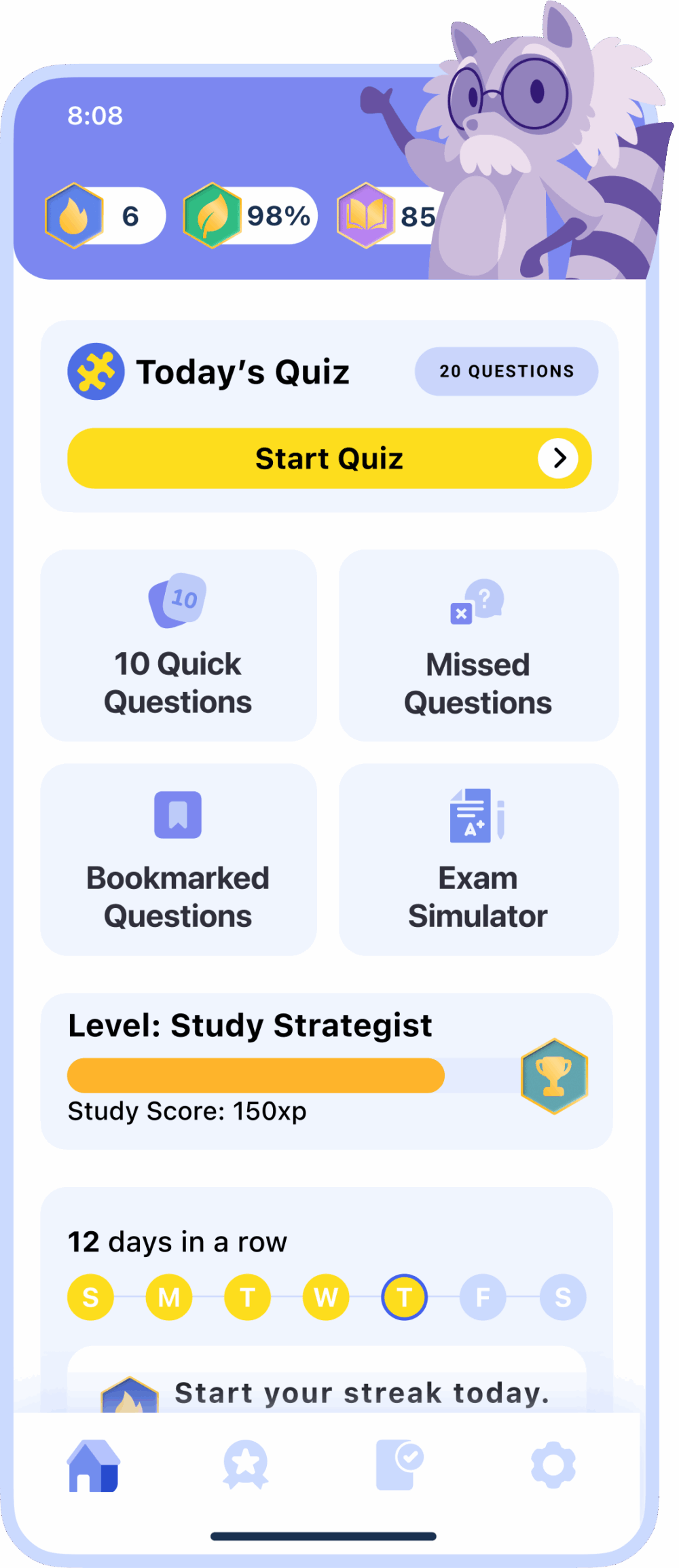
EZ Prep’s site emphasizes mobile-friendly, goal-driven prep (study anywhere, keep progress visible, keep you consistent). (EZ Prep)
(If you’re using the EZ Prep ASVAB app specifically, use this workflow.)
1) Set a test date and a daily goal
Pick a realistic daily target (even 15 minutes). Consistency beats heroics.
2) Start with topic practice, then go mixed
- First: drill by topic to learn patterns
- Then: switch to mixed quizzes so your brain learns to choose the right tool under pressure
3) Turn on timed practice at least 3x/week
Time pressure changes everything. Build comfort before test day.
4) Live in your “missed questions” queue
Your score improves fastest when you re-attack what you missed:
- Re-do the question without looking
- Read the explanation
- Re-do a similar question later
5) Use bookmarks for “I almost get it” questions
Bookmark questions that are close, not hopeless. Those are your easiest points to recover.
6) Add a couple of free external resources (smartly)
If you want extra practice, these are worth using:
- Official ASVAB info on subtests and scoring (ASVAB)
- March2Success (widely cited as a free ASVAB resource) (fiveandthrive.org)
- Today’s Military overview, including PiCAT notes (Today’s Military)
Encouragement (because you’re doing the hard part)
If you’re studying, you’re already ahead of most people who “plan to study” and then mysteriously end up reorganizing their room for three hours.
The ASVAB is learnable. It rewards reps, not genius. Build consistency, focus on AFQT first, and let your mistakes teach you exactly what to do next. If you need a retake, it’s not the end of the road, just a schedule change with official rules. (ASVAB)
When you’re ready: take a practice test, set your daily plan, and stack small wins until your score has no choice but to follow.
If you want, paste your current practice scores (even rough ones) and I’ll suggest a tight weekly plan based on your weakest subtests.


