

10 Mar 2026
Updated: 3 Mar 2026
Effective Studying for the NCE Exam: A Real-World Guide That Actually Works
If you are preparing for the NCE exam, you already know this is not a casual pop quiz you can wing on caffeine and optimism. The National Counselor Examination is comprehensive, concept heavy, and designed to test how well you understand counseling theory, ethics, assessment, and application, not just whether you can memorize definitions.
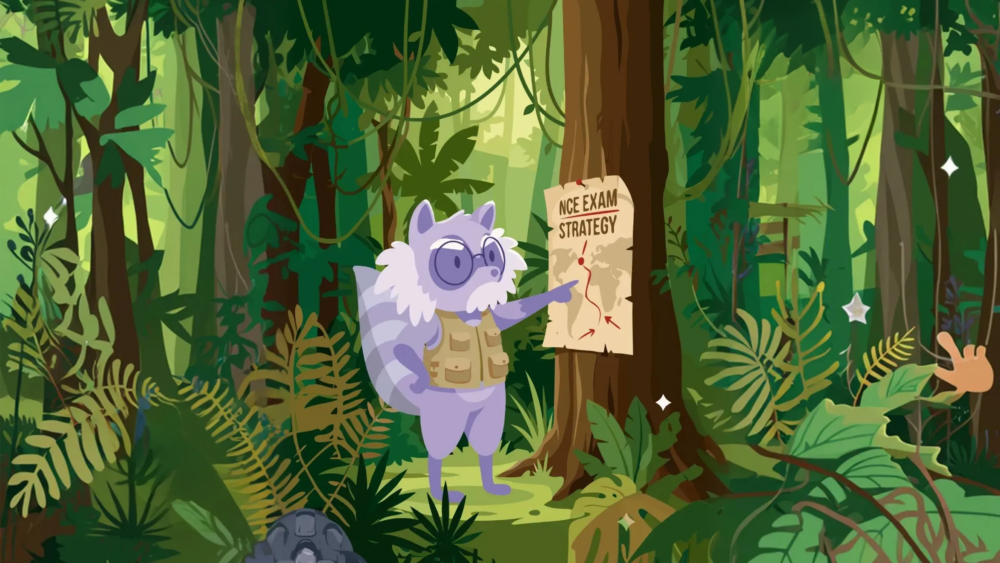
You can find official exam information, registration steps, and policies directly through the National Board for Certified Counselors at https://www.nbcc.org/exams/nce. Always start there. It keeps you grounded in what the exam actually covers instead of what your anxiety thinks it covers.
Effective studying is not about studying more. It is about studying better. Your habits, environment, structure, and mental health all matter. Below is a practical, slightly no-nonsense guide to building a study system that actually prepares you for the NCE.
Why Study Habits Matter More Than Motivation
Motivation is unreliable. It shows up strong in week one, disappears in week three, and reappears the night before the exam in a panic. Habits, on the other hand, carry you through when your enthusiasm fades.
Research consistently shows that structured, spaced practice leads to better retention than cramming. If you want a deep dive into the science of learning, you can explore evidence-based study research through resources like Harvard’s learning and memory summaries: https://hwpi.harvard.edu/files/smithlab/files/science_of_learning.pdf.
The takeaway is simple. Consistency beats intensity. Smart systems beat heroic effort.
Let’s build your system.
Where to Study: Your Environment Matters More Than You Think
Before you obsess over flashcards and practice questions, look at your physical setup.
Choose a Dedicated Location
Pick one primary study location and stick with it. This conditions your brain to associate that space with focus. It can be a quiet corner of your home, a library table, or a coffee shop if you truly focus there and not just people-watch.
Comfort, But Not Too Comfortable
You want a supportive chair, decent desk height, and enough space for materials. You do not want your bed. Your brain associates beds with sleep. Studying there is a fast track to scrolling or napping.
Lighting and Visual Clarity
Natural light is ideal. If that is not available, use bright, neutral lighting. Dim lighting makes your brain feel like it is time to power down.
Limit Distractions
Silence notifications. Use website blockers if necessary. If you need background noise, try instrumental music or ambient sounds.
Keep Resources Within Reach
Have your study materials, notebooks, highlighters, water, and snacks nearby. The fewer reasons you have to get up, the fewer chances you have to derail your momentum.
This is not glamorous advice. It works.
How to Study: Methods That Actually Improve Retention
Reading the same chapter three times is not a strategy. It is procrastination disguised as productivity.
Here are three high-impact methods that outperform passive review.
Spaced Repetition and the Leitner System
Spaced repetition is based on reviewing material at increasing intervals. Instead of cramming, you revisit concepts right before you are likely to forget them.
The Leitner System uses flashcards sorted into boxes. Cards you know move to a box reviewed less frequently. Cards you struggle with stay in a box reviewed more often.
For NCE prep, create flashcards for:
- Theories and key theorists
- Ethical principles
- Assessment tools
- Diagnostic criteria
- Career development models
Review them daily at first, then space them out. Many study apps support spaced repetition. EZ Prep or similar tools can help structure this process without you having to manually manage boxes of index cards.
Pomodoro Technique
The Pomodoro Technique is simple:
- Study for 25 minutes
- Take a 5 minute break
- Repeat four times
- Take a longer 20 to 30 minute break
This prevents burnout and keeps your brain sharp. The NCE requires sustained concentration. Training your focus in intervals builds endurance.
Feynman Technique
If you cannot explain a concept simply, you do not understand it.
Pick a topic like cognitive behavioral therapy or group stages of development. Write out an explanation as if teaching a first-year counseling student. Avoid jargon. Identify gaps. Review those gaps.
Teaching forces clarity. Clarity wins exams.
Planning Your Study Schedule: Structure Beats Stress
Hope is not a study plan.
Yearly or Long-Term Planning
If you are months out from your exam, outline major content domains and assign them to months. Rotate through them more than once. The NCE is cumulative.
Example:
- Month 1 to 2: Theories and human growth
- Month 3: Assessment and diagnosis
- Month 4: Ethics and professional practice
- Month 5: Comprehensive review and practice exams
Adjust based on your timeline.
Weekly Planning
At the start of each week:
- Choose 3 to 5 key objectives
- Schedule study sessions
- Assign specific topics to each session
Be specific. “Study assessment” is vague. “Review intelligence testing and complete 30 practice questions” is actionable.
Daily Planning
At the beginning of each study session:
- Write down what you will complete
- Estimate how long it will take
- Start with your hardest topic
Prioritize high-yield content. Ethics, diagnosis, and theory application frequently appear and require more than surface knowledge.
Reading Strategies: Stop Highlighting Everything
You do not need to read every page at the same speed.
Estimate Your Reading Speed
Most adults read 200 to 300 words per minute. Time yourself for one page and calculate your average. This helps you plan realistic study blocks.
Types of Skimming
Preview before deep reading:
- Scan headings and subheadings
- Read bold terms
- Review summaries and questions
This creates a mental framework before you dive in.
Highlighting Dos and Don’ts
Do:
- Highlight key definitions
- Highlight relationships between concepts
- Highlight examples that clarify theory
Do not:
- Highlight entire paragraphs
- Highlight things you already know
- Use five different colors for no reason
Highlighting is for emphasis, not decoration.
Note-Taking Methods: Choose One That Fits Your Brain
There is no single perfect system. Try a few and commit to one.
Cornell Method
Divide your page into:
- Main notes
- Cue column for questions or keywords
- Summary section
This is excellent for reviewing theories and ethics.
Outline Method
Use bullet points and indentation. This works well for structured material like developmental stages or diagnostic categories.
Mind Mapping
Start with a central concept, branch out into related ideas. This is ideal for connecting counseling theories and techniques.
Sentence Method
Write key points in concise sentences. Useful for fast-paced review sessions.
Boxing Method
Group related ideas in boxes on the page. This helps visually separate concepts like assessment types versus intervention strategies.
Charting Method
Use tables to compare theories, assessments, or ethical principles. Comparison strengthens recall.
Pick one or two methods. Do not switch every week just because a productivity influencer told you to.
Wellness Habits That Actually Support Studying
You cannot out-study sleep deprivation.
Nutrition
Eat balanced meals with protein, complex carbohydrates, and healthy fats. Avoid relying on sugar spikes. Stable energy equals stable focus.
Exercise
Even 20 minutes of walking improves cognitive performance. Movement increases blood flow to the brain. It also reduces anxiety.
Sleep
Aim for 7 to 9 hours per night. Sleep consolidates memory. Pulling all-nighters sabotages retention.
Breaks
Take real breaks. Step away from screens. Stretch. Hydrate. Your brain needs downtime to encode information.
Studying is not just mental work. It is biological.
Test Readiness: The Final Stretch
The Day Before the Exam
Review lightly. Focus on high-yield summaries. Do not attempt to relearn entire domains.
Confirm logistics:
- Test location
- Arrival time
- Required identification
If you need general guidance on standardized test-day policies and procedures, review official testing policies through your testing provider and relevant credentialing bodies. Always rely on primary sources for the most accurate information.
Prepare your materials and plan your route. Reduce uncertainty wherever possible.
The Day Of
Eat a balanced meal. Arrive early. Breathe.
During the exam:
- Read each question carefully
- Eliminate obviously incorrect answers
- Watch for qualifiers like “best” or “most appropriate”
- Pace yourself
If anxiety spikes, pause for 10 seconds. Slow your breathing. Remind yourself that you prepared.
Managing Test Anxiety
Practice with timed exams beforehand. Exposure reduces fear.
Use cognitive reframing. Instead of “I am going to fail,” try “I have trained for this.”
Ground yourself physically. Notice your feet on the floor, your breath, your posture.
After the Exam
Once you finish, let it go. Do not perform a post-exam autopsy with classmates. It will not change the outcome.
Celebrate the effort. Regardless of the result, you showed up and did the work.


Final Thoughts: Study Smart, Not Dramatic
Effective NCE studying is not about martyring yourself to endless hours of unfocused reading. It is about:
- A distraction-free environment
- Evidence-based study techniques
- A structured plan
- Strategic reading and note-taking
- Solid wellness habits
- Calm, prepared test-day execution
You do not need a hundred resources. You need a clear system and consistent effort. Tools like EZ Prep or other structured study apps can help organize your practice questions and spaced repetition, but the real work is still yours.
Study intentionally. Protect your energy. Trust your preparation.
And maybe, just maybe, skip the 2 am panic session the night before. Your future counselor brain will thank you.


