

25 Mar 2026
Updated: 9 Mar 2026
Effective Studying for the NBCE Exam: A Realistic Guide That Actually Works
Preparing for the NBCE exam is not just about working harder. It is about working smarter, staying consistent, and avoiding those late-night moments when your flashcards start to look like abstract art.
The good news is that effective studying is not mysterious. It is strategic. When you understand how learning actually works, you can build habits that make your study time productive instead of exhausting.
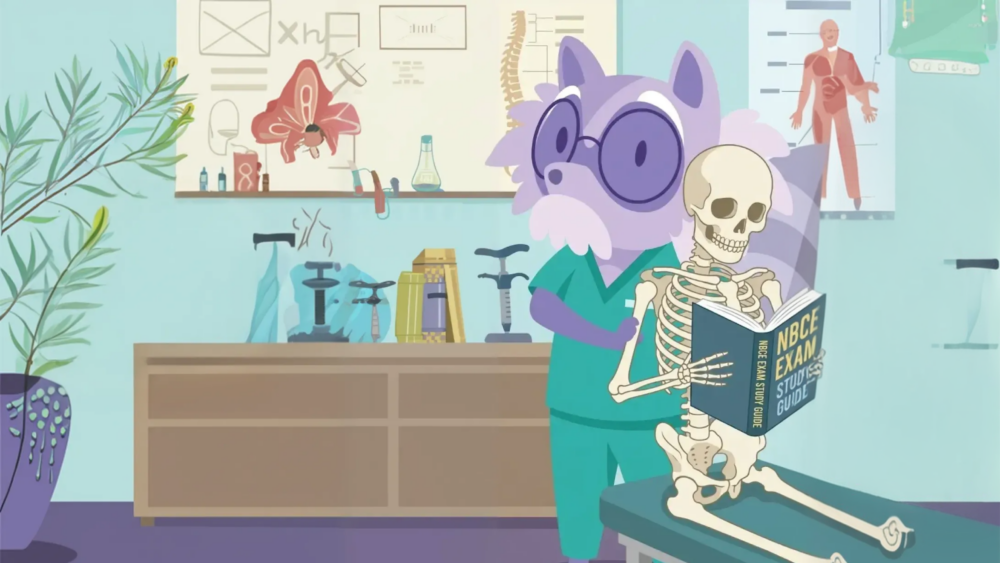
If you want official information about exam structure and policies, always start with the source: the National Board of Chiropractic Examiners at https://www.nbce.org. Knowing the format removes a lot of unnecessary anxiety before you even open a textbook.
Let’s break down what effective studying really looks like for the NBCE exam.
Why Study Habits Matter More Than Raw Intelligence
The NBCE exam does not test whether you are smart. You already got through chiropractic school. It tests whether you can retrieve information accurately under pressure.
That requires:
- Long-term retention
- Pattern recognition
- Clinical reasoning
- Focus under stress
Random marathon study sessions will not build those skills. Consistent, structured study will.
Research on learning science consistently shows that spaced repetition, active recall, and deliberate practice outperform passive rereading. If you want a deep dive into how learning works, check out this evidence-based overview from Harvard’s Program on Learning and Teaching: https://bokcenter.harvard.edu/how-people-learn.
Now let’s talk about how to apply that to your NBCE prep.
Where to Study: Your Environment Matters More Than You Think
Yes, technically, you can study anywhere. No, you probably should not.
Choose a Consistent Location
Your brain builds associations. If you study in the same place consistently, your mind starts to associate that location with focus.
Ideal characteristics:
- Quiet environment
- Minimal foot traffic
- Neutral temperature
- Comfortable but not too comfortable
Your bed is not a study location. It is a sleep location. Keep those worlds separate.
Lighting and Ergonomics
Good lighting reduces fatigue. Natural light is best. If that is not possible, use bright but warm lighting.
Sit at a desk with proper posture. You are preparing to be a healthcare professional. Do not study like a shrimp.
Limit Distractions
Silence your phone or use app blockers. If you need background sound, try instrumental music or white noise.
Keep only essential materials within reach. If you need to check something, make it intentional, not automatic scrolling.
Access to Resources
Have everything ready before you start:
- Notes
- Practice questions
- Flashcards
- Timer
- Water
The fewer reasons you have to get up, the better.
If you use digital tools, organized study apps can help centralize materials. Some students use platforms like EZ Prep for structured question banks and spaced review, but the key is consistency, not brand loyalty.


How to Study: Methods That Actually Improve Retention
This is where most students go wrong. Reading passively feels productive. It is not.
Spaced Repetition and the Leitner System
Spaced repetition works by reviewing information at gradually increasing intervals. The Leitner System uses flashcards sorted into different boxes based on how well you know the material.
- If you answer correctly, the card moves to a box that is reviewed less often.
- If you answer incorrectly, the card goes back to a box that is reviewed more frequently.
Over time, this process strengthens memory and helps information stick.
Many digital flashcard tools automate spaced repetition, but physical flashcards work just as well.
The Pomodoro Technique
Study in focused intervals:
- 25 minutes of work
- 5-minute break
- After four cycles, take a longer break
Use a timer. During those 25 minutes, you are fully locked in. No multitasking.
Short bursts improve focus and reduce burnout.
The Feynman Technique
If you cannot explain a concept in simple terms, you do not truly understand it.
Steps:
- Pick a concept
- Explain it as if teaching a patient or a first-year student
- Identify gaps in your explanation
- Review and simplify
This is especially useful for complex subjects like neuroanatomy and pathology.
Planning Your Study Schedule: Because “I’ll Study Later” Is Not a Plan
You need structure. Without it, studying expands to fill every waking hour while accomplishing very little.
Yearly or Long Range Planning
If you know your exam date, work backward.
Divide content into manageable phases:
- Content review
- Reinforcement and practice questions
- Full-length simulations
- Final consolidation
Map out broad monthly goals.
Weekly Planning
At the start of each week:
- Identify priority subjects
- Assign specific chapters or question sets
- Schedule study blocks
Build in one lighter day. Your brain needs recovery.
Daily Planning
Each day should include:
- Clear objectives
- Specific time blocks
- Defined stopping point
Do not say, “Study cardiology.” Say, “Complete 40 cardiology questions and review missed concepts.”
Prioritize high-yield topics and weak areas first. Comfort studying is not a strategy.
Reading Strategies: Stop Highlighting Everything
If your textbook looks like a neon art project, we need to talk.
Estimate Your Reading Speed
Most students read between 200 and 300 words per minute. Time yourself for one page. Knowing your pace helps you plan realistically.
Skimming Types
Preview reading:
- Headings
- Subheadings
- Diagrams
- Summary sections
This builds a mental framework before deep reading.
Selective skimming works well during review phases when you already know the content.
Highlighting Dos and Don’ts
Do:
- Highlight sparingly
- Focus on definitions, mechanisms, and high-yield facts
Don’t:
- Highlight entire paragraphs
- Highlight before you understand
Highlighting is a tool, not a coping mechanism.
Note Taking Methods: Choose One That Matches Your Brain
There is no universal best method. There is only what works for you.
Cornell Method
Divide your page into cues, notes, and summary. Great for structured lectures and review.
Outline Method
Hierarchical bullet points. Best for organized subjects with clear categories.
Mind Mapping
Visual diagrams connecting concepts. Useful for physiology and systems integration.
Sentence Method
Quick, straightforward statements. Good for fast-paced lectures.
Boxing Method
Group related information in boxes. Works well for comparing conditions.
Charting Method
Create comparison tables. Ideal for differential diagnoses and similar disorders.
Experiment early. Then commit to one or two systems to avoid chaos.
Wellness Habits That Support Studying
You cannot out-study poor sleep and junk nutrition.
Nutrition
Eat balanced meals. Prioritize:
- Protein
- Complex carbohydrates
- Healthy fats
- Hydration
Caffeine is fine. Caffeine as a personality trait is not.
Exercise
Even 20 minutes of walking improves cognitive performance and stress regulation.
Sleep
Aim for 7 to 9 hours. Memory consolidation happens during sleep. All-night study sessions sabotage retention.
For evidence on sleep and learning, see the Sleep Foundation’s overview on sleep and memory: https://www.sleepfoundation.org/how-sleep-works/how-sleep-affects-learning.
Breaks
Scheduled breaks prevent burnout. Unscheduled doom scrolling does not count.
Test Readiness: The Final Stretch
Preparation does not end when studying stops.
The Day Before
Do a light review only. No cramming new material.
Prepare:
- ID
- Testing confirmation
- Directions to the testing center
- Snacks if allowed
Review official test day policies here: https://www.nbce.org/exams/test-day/.
Then stop studying. Seriously.
The Day Of
Arrive early. Breathe slowly. Use positive self-talk.
During the exam:
- Read each question carefully
- Eliminate obvious wrong answers
- Watch your time, but do not obsess
- Flag and move on if stuck
Managing Test Anxiety
Use controlled breathing:
Inhale for four seconds
Hold for four seconds
Exhale for six seconds
Remind yourself that you have trained for this.
After the Exam
Do not autopsy every question. You cannot change anything now.
Eat something. Preferably something that is not instant noodles consumed in emotional distress.
Final Thoughts: Studying Is a Skill, Not a Personality Trait
Effective studying for the NBCE exam is about:
- Structured planning
- Evidence-based learning strategies
- Healthy routines
- Realistic expectations
You do not need to be perfect. You need to be consistent.
Use tools that support your system. Whether that is structured flashcards, question banks, or an app like EZ Prep, what matters is repetition, reflection, and disciplined execution.
The NBCE exam is a hurdle. Not your identity.
Study smart. Take care of yourself. Show up ready.
You have already done the hard part by getting this far.


