

20 Mar 2026
Updated: 3 Mar 2026
Effective Studying for the NASM Exam: A No-Nonsense Guide That Actually Works
So you signed up for the NASM CPT exam. Good choice. Now comes the part nobody posts about on Instagram: actually studying.
The NASM exam is not impossible, but it is precise. It rewards people who understand concepts like the Optimum Performance Training model, overactive and underactive muscles, and program design logic. It does not reward cramming the night before while sipping a protein shake and hoping for divine intervention.
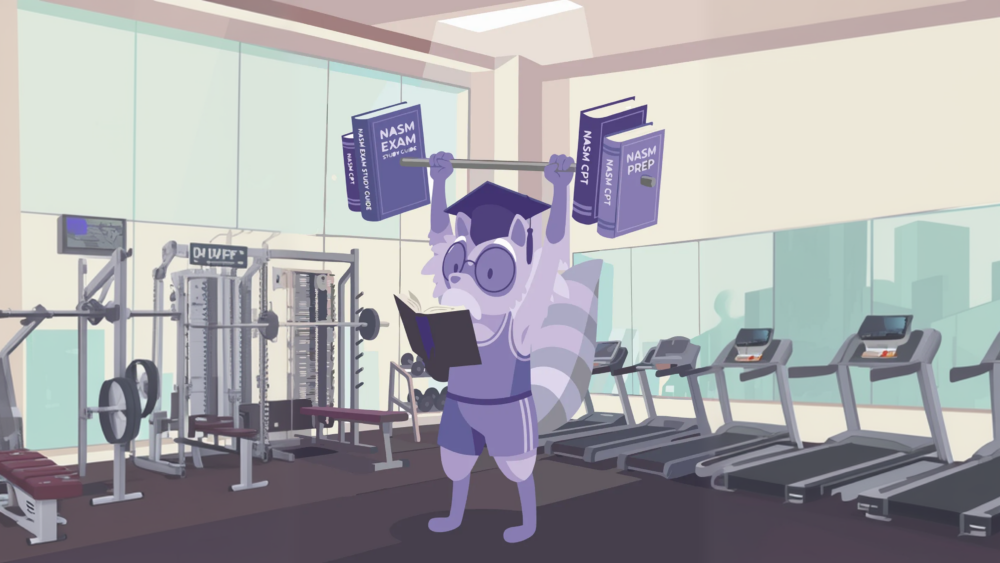
This guide walks you through how to study effectively, not just how to “study more.” If you build the right habits now, you will not just pass. You will understand the material well enough to coach real humans safely and confidently.
Why Study Habits Matter More Than Study Hours
The NASM exam tests application. It is less about memorizing random definitions and more about recognizing patterns, correcting imbalances, and designing programs appropriately.
Effective study habits help you:
- Retain information long term
- Avoid burnout
- Reduce test anxiety
- Build practical understanding
Research from institutions like Harvard’s Learning and Teaching resources consistently shows that spaced practice and active recall outperform passive rereading every time. If your current strategy is rereading chapters while highlighting everything in neon, we need to talk.
Where to Study: Your Environment Is Doing More Than You Think
Before you obsess over flashcards, look at your study space.
Location
Choose a consistent location. Your brain associates environment with behavior. If your couch is for Netflix, it will stay that way. If your desk is for studying, your brain will adapt.
Options:
- Quiet room at home
- Library study room
- Dedicated desk setup
- Coffee shop, if you can handle background noise
Comfort
You should be comfortable but not horizontal. If you can fall asleep in your study position, it is not a study position.
Use:
- Supportive chair
- Proper desk height
- Laptop stand or textbook stand to reduce neck strain
Lighting
Natural light is ideal. If that is not possible, use bright white lighting. Dim lighting signals relaxation, not focus.
Limit Distractions
Put your phone out of reach. Not face down. Out of reach.
Consider:
- App blockers
- Noise canceling headphones
- Focus playlists
Access to Resources
Have everything ready before you start:
- NASM textbook
- Notes
- Flashcards
- Practice quizzes
- Study apps like EZ Prep, if you want structured review support
Fewer interruptions equals deeper focus.
How to Study: Methods That Actually Stick
Let us move beyond “read chapter 7.”
Spaced Repetition and the Leitner System
Spaced repetition means reviewing information at increasing intervals. It works because your brain strengthens memories each time you retrieve them.
The Leitner System is simple:
- Box 1: New flashcards reviewed daily
- Box 2: Cards answered correctly move here, reviewed every few days
- Box 3: Mastered cards reviewed weekly
When you miss a card, it goes back to Box 1. Humbling, but effective.
Use this for:
- Overactive and underactive muscle pairs
- OPT model stages
- Acute variables
- Special population guidelines
The Pomodoro Technique
This method helps you avoid burnout.
- Study 25 minutes
- Take a 5 minute break
- Repeat 4 times
- Take a longer break
During the 25 minutes, you do exactly one task. No multitasking. No “quick scroll.”
It sounds simple. That is the point.
The Feynman Technique
If you cannot explain it simply, you do not understand it.
Steps:
- Pick a concept, for example, the overhead squat assessment
- Explain it out loud as if teaching a beginner
- Identify gaps
- Review and simplify
This method is brutally honest. It will show you where you are guessing.
Planning Your Study Schedule
If your plan is “I will study when I feel motivated,” you will feel motivated twice.
Structure wins.
Yearly or Long-Term Planning
If you have several months:
- Map out all textbook chapters
- Assign rough completion dates
- Schedule practice exams at least 3 to 4 weeks before test day
Build in buffer weeks. Life happens.
Weekly Planning
Each week:
- Identify specific chapters or objectives
- Schedule 4 to 6 study sessions
- Include review days
Example:
- Monday: Chapter 5 OPT model
- Wednesday: Acute variables review
- Friday: Practice questions
Daily Planning
Before each session, define:
- Exact pages or concepts
- Specific practice sets
- Review material
Vague plans create vague results.
Prioritization
Focus more time on:
- Assessment techniques
- Corrective exercise
- Program design
- Special populations
These are heavy hitters on the exam.
Reading Strategies That Save Time
Let us talk about reading the NASM textbook. It is thorough. It is also dense.
Estimate Your Reading Speed
Average adult reading speed is around 200 to 300 words per minute. Time yourself on one page and calculate your average. This helps you plan realistically.
Skimming With Purpose
There are two useful types of skimming:
Preview skimming:
- Read headings
- Look at charts and tables
- Read summaries
Review skimming:
- Revisit key bold terms
- Check your highlighted sections
- Review diagrams
Skimming is not replacing reading. It supports it.
Highlighting Dos and Don’ts
Do:
- Highlight definitions
- Highlight lists you must memorize
- Use one color consistently
Do not:
- Highlight entire paragraphs
- Highlight before you understand
- Use six different colors for no reason
Highlighting is a tool, not decoration.
Note-Taking Methods That Fit NASM Content
Different content types benefit from different methods.
Cornell Method
Best for lecture videos or structured reading.
- Main notes on the right
- Key questions on the left
- Summary at the bottom
Excellent for OPT model summaries.
Outline Method
Ideal for hierarchical content.
Example:
- Phase 1 Stabilization
- Acute variables
- Goals
- Exercise examples
Clean and organized.
Mind Mapping
Great for visual learners.
Start with “OPT Model” in the center and branch out:
- Phases
- Adaptations
- Training variables
Useful for seeing connections.
Sentence Method
Write each point as a separate sentence. Fast but less structured. Good for quick lectures.
Boxing Method
Group related ideas into boxes. Helpful for comparing:
- Overactive muscles
- Underactive muscles
- Corrective strategies
Charting Method
Create tables. This is extremely useful for:
- Special populations
- Contraindications
- Acute variable comparisons
Charts simplify complex comparisons.
Wellness Habits That Support Studying
You cannot out-study bad sleep.
Nutrition
Eat balanced meals:
- Protein for satiety
- Complex carbs for steady energy
- Healthy fats for brain function
Avoid studying fueled only by caffeine and vibes.
Exercise
You are studying to be a trainer. Move your body.
Exercise improves cognitive function and stress management. Even 20 minutes helps.
Sleep
Aim for 7 to 9 hours. Memory consolidation happens during sleep. Pulling all-nighters sabotages retention.
Breaks
Take intentional breaks:
- Short walks
- Stretching
- Deep breathing
Breaks are part of productivity, not the enemy of it.
Test Readiness: The Final Stretch
The Day Before
Do:
- Light review
- Review flashcards
- Confirm testing location or online setup
- Prepare your ID
Do not:
- Start new chapters
- Panic-study for 12 hours
Check NASM’s official policies for your testing format through their website to confirm requirements.
If you want general guidance on exam policies and professional licensure standards, reviewing official exam policy pages such as the ASWB Examination Guide can give you a sense of how professional testing environments operate: https://www.aswb.org/exam-candidates/
The Day Of
Arrive early. Eat a balanced meal. Breathe.
During the exam:
- Read each question carefully
- Eliminate obviously wrong answers
- Watch for keywords like “most appropriate”
- Do not change answers unless you have a clear reason
Trust your preparation.
Managing Test Anxiety
Test anxiety is normal. Strategies:
- Slow breathing before starting
- Positive self-talk
- Reframing nerves as excitement
If anxiety is a recurring issue, research-backed study habit strategies from academic success centers, such as Harvard’s learning resources, can provide helpful frameworks: https://learningcenter.harvard.edu/


After the Exam
Once you submit:
- Do not obsess over every question
- Reflect on your preparation
- Celebrate finishing
If you pass, congratulations. If you do not, it is data. Adjust your strategy and try again.
Final Thoughts: Study Smart, Not Dramatically
The NASM exam is not designed to trick you. It is designed to confirm competence.
Effective studying comes down to:
- Structured planning
- Active recall
- Spaced repetition
- Clear note-taking
- Consistent wellness habits
You do not need twelve highlighters and a dramatic montage. You need a system.
If you want structured practice questions and guided review, tools like EZ Prep or other focused study apps can help organize your review. Just remember, no app replaces disciplined study habits.
Build the habits. Follow the plan. Show up prepared.
Your future clients will thank you.


